BUILD_03 · DRLAMBDA · HUMAN-IN-THE-LOOP AUTHORING

Make AI generation a controllable editing loop.

I designed a 0→1 AI-native presentation platform that combines template creation, document-driven generation, and contextual AI editing without asking users to surrender authorship.

RoleProduct Designer · 0→1 AI authoring
DesignedGeneration loop, contextual editing, user control
PrototypeHigh-fidelity end-to-end creation workflow
ToolkitFigma · generative AI · LLM interaction · experimentation
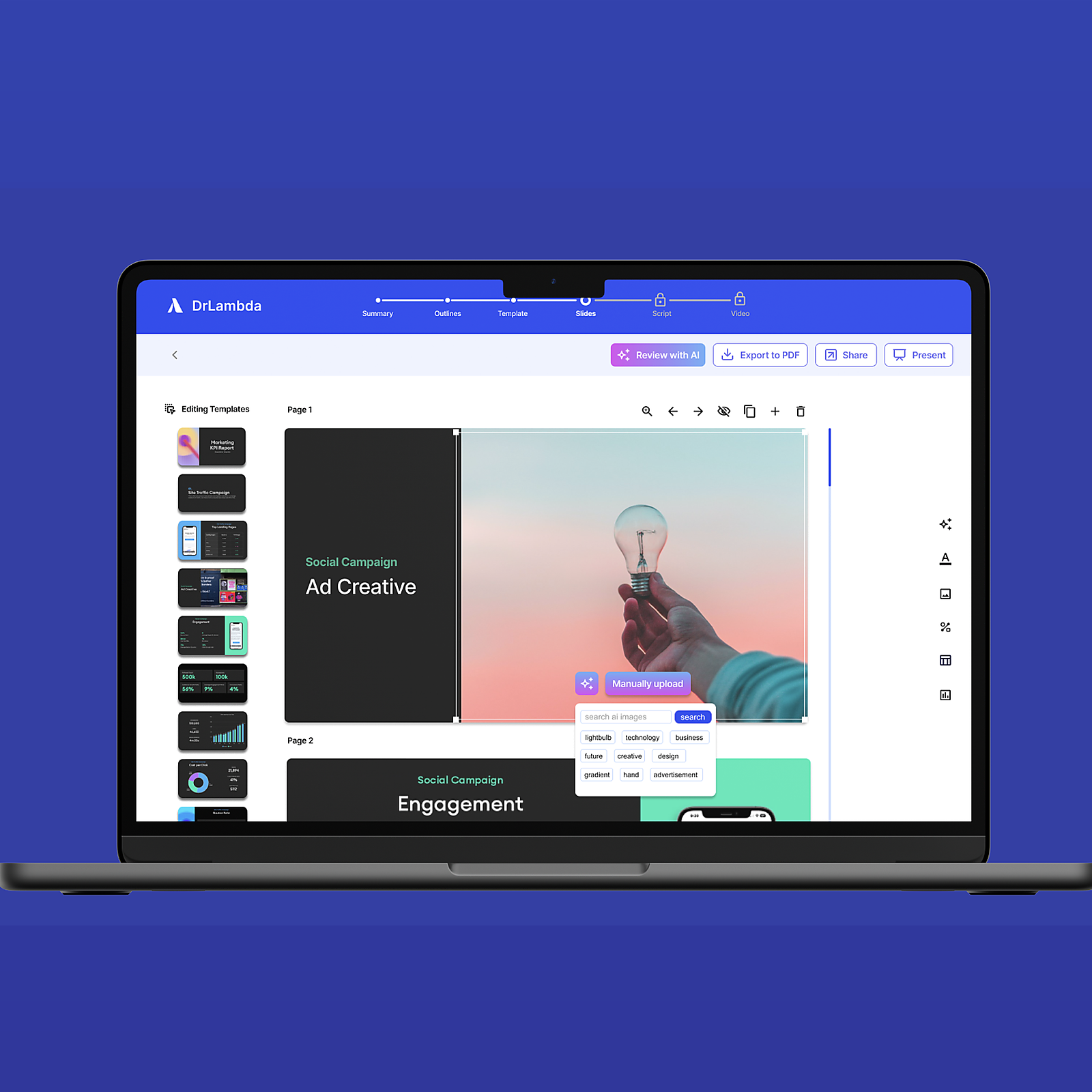
DrLambda AI authoring workspace
01 · Technical product question

How much should AI change before the user needs to decide?

Automation feels fast until users have to reconstruct what changed, why it changed, and how to undo it.

One-shot generation created a draft but also created verification work. The system needed to move between suggestion, preview, application, and recovery without breaking the user's mental model of the deck.

Constraint 01

Different levels of intent

A user may want help with one sentence, one slide, the narrative structure, or the entire deck.

Constraint 02

Non-local effects

Changing an argument can affect titles, supporting content, order, and visual hierarchy elsewhere.

Constraint 03

Trust after generation

People need to inspect recommendations, understand rationale, edit results, and recover earlier states.
02 · Interaction model

A progressive loop from intent to reversible change.

The model delays commitment. AI first scopes the request, generates a plan, exposes the proposed change, then applies it only at the control level the user selected.

Human-AI authoring loop
01Capture intent
02Scope impact
03Preview plan
04Review change
05Apply or recover
Control modesSuggest · review · auto+undo
Change objectTarget · rationale · dependency
VisibilityDiff · source · confidence
RecoveryReject · edit · undo · branch
03 · Working behavior

The prototype tested control across the whole creation loop.

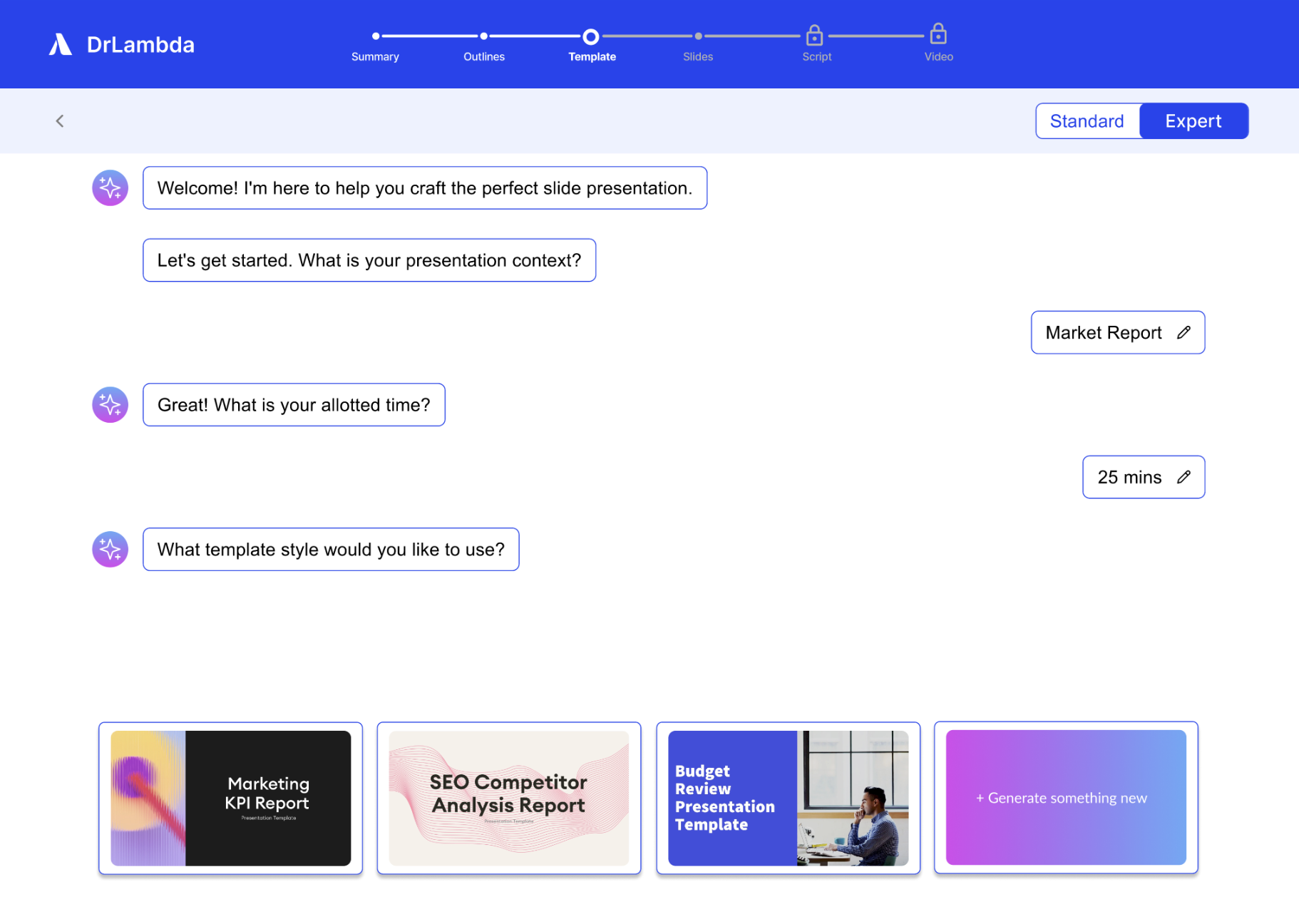
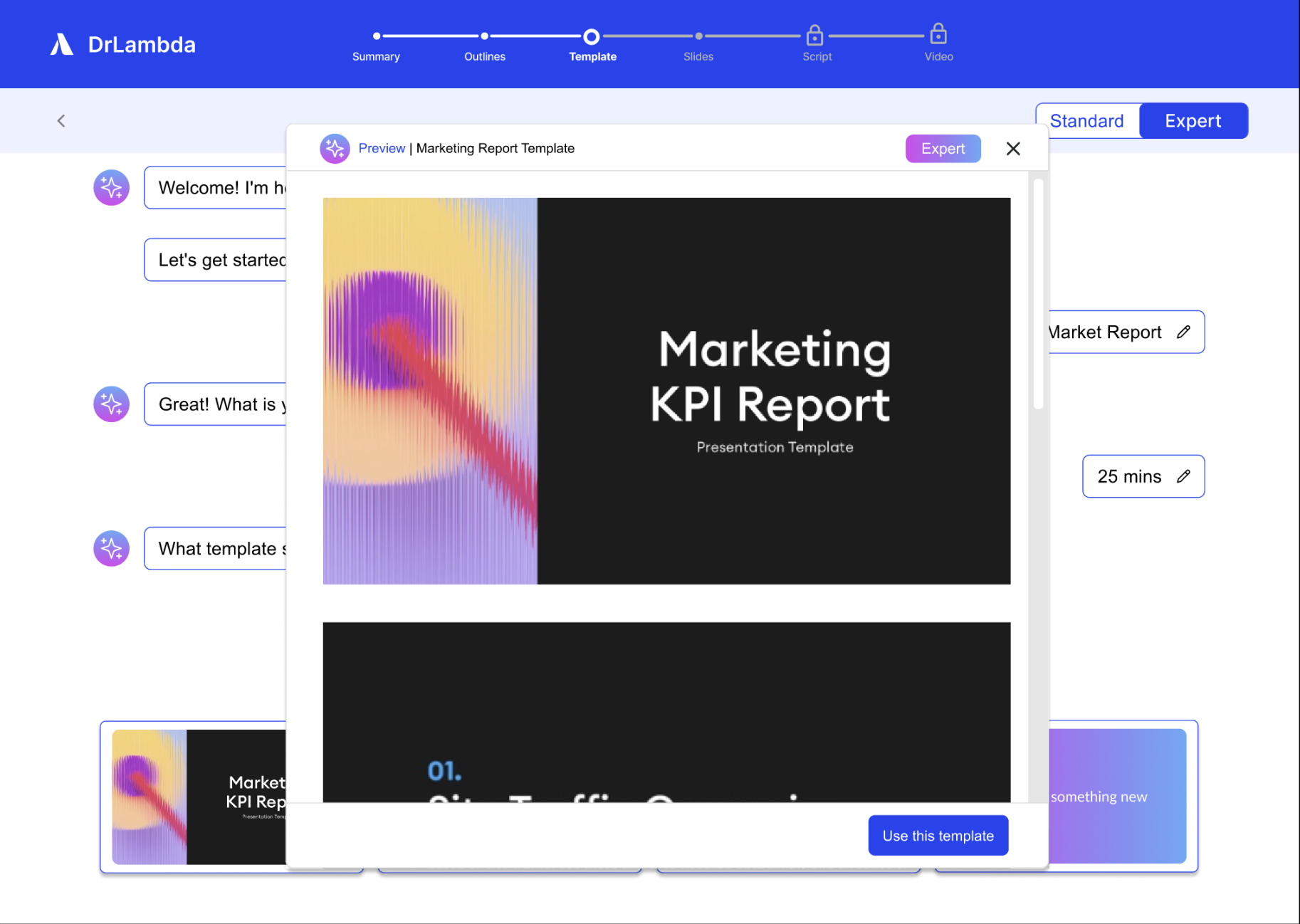
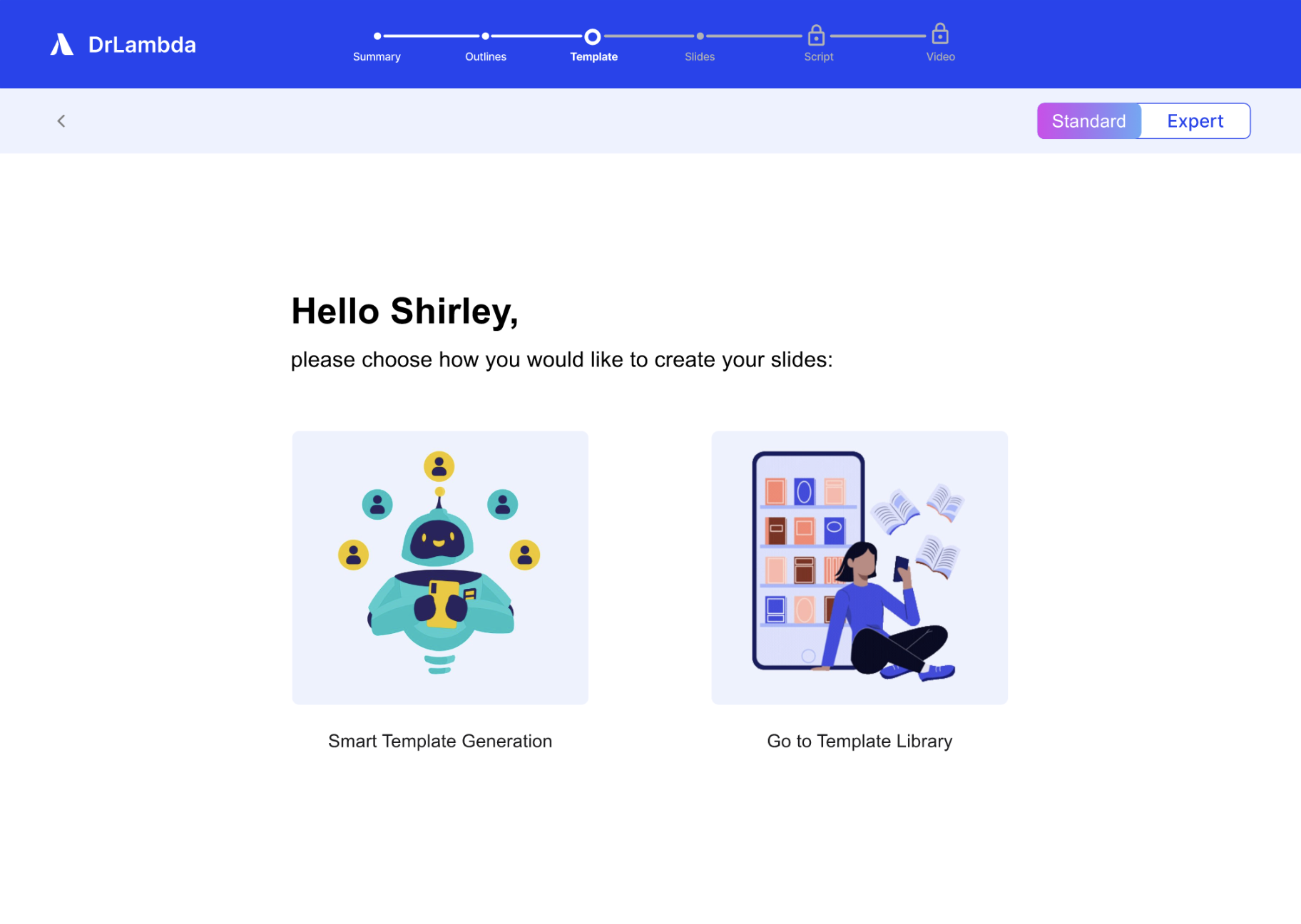
Prototype 01 · Intent routing

Start with the creation mode, not an empty prompt.

The entry prototype separates template-led, document-led, and AI-led creation so the system knows what context it can safely infer.

  • Creation mode establishes the expected source of truth.
  • Structured inputs reduce ambiguity before generation begins.
  • Users can change the route without discarding provided context.
DrLambda creation entry choicesDrLambda template choices
Prototype 02 · Preview boundary

Make structural commitment a visible moment.

Before creating the deck, the system previews the planned outline and lets users revise assumptions while changes are still cheap.

  • Plan-level edits happen before slide generation.
  • Assumptions and missing context are surfaced explicitly.
  • Users can lock parts of the structure they do not want AI to change.
DrLambda outline preview
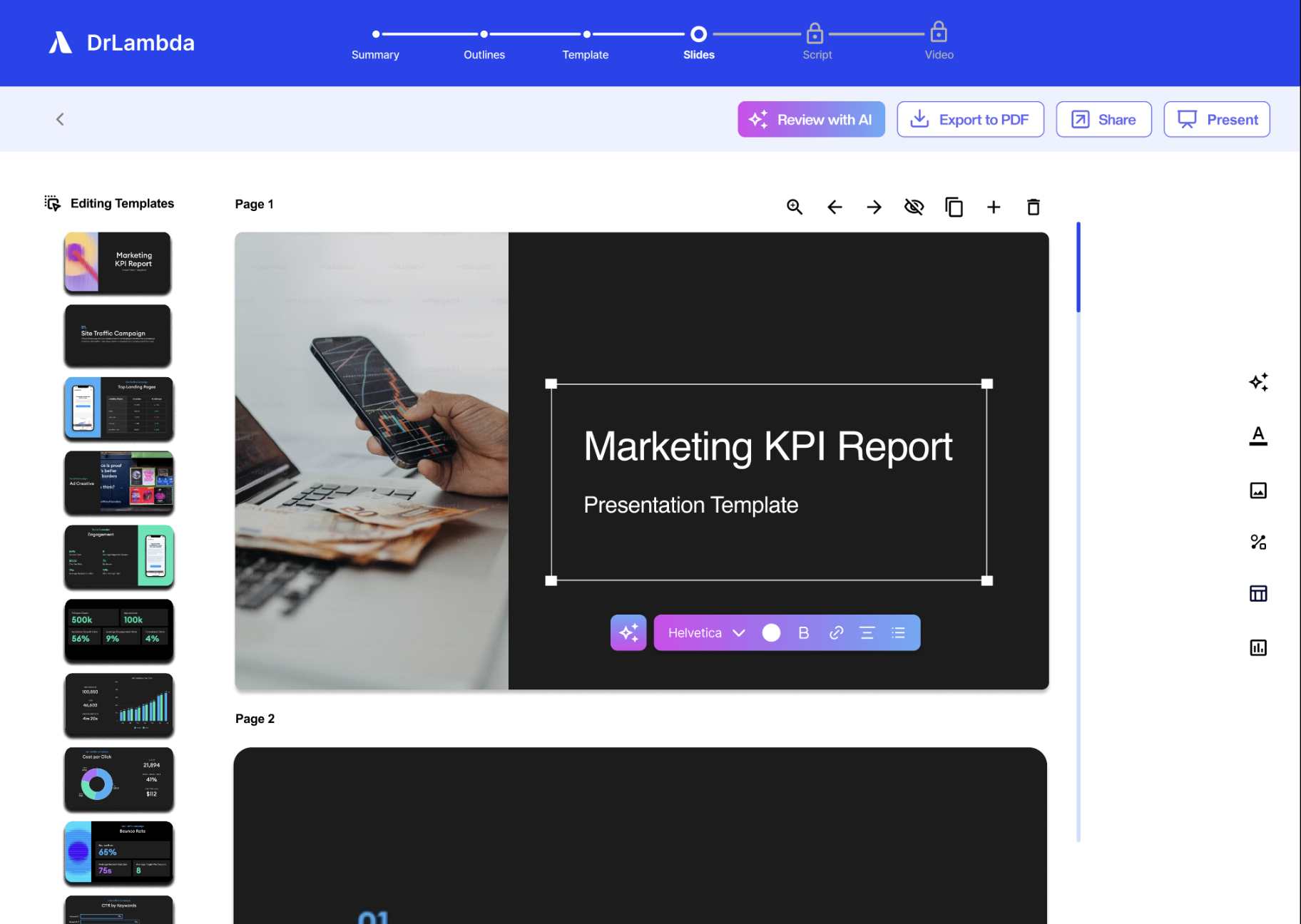
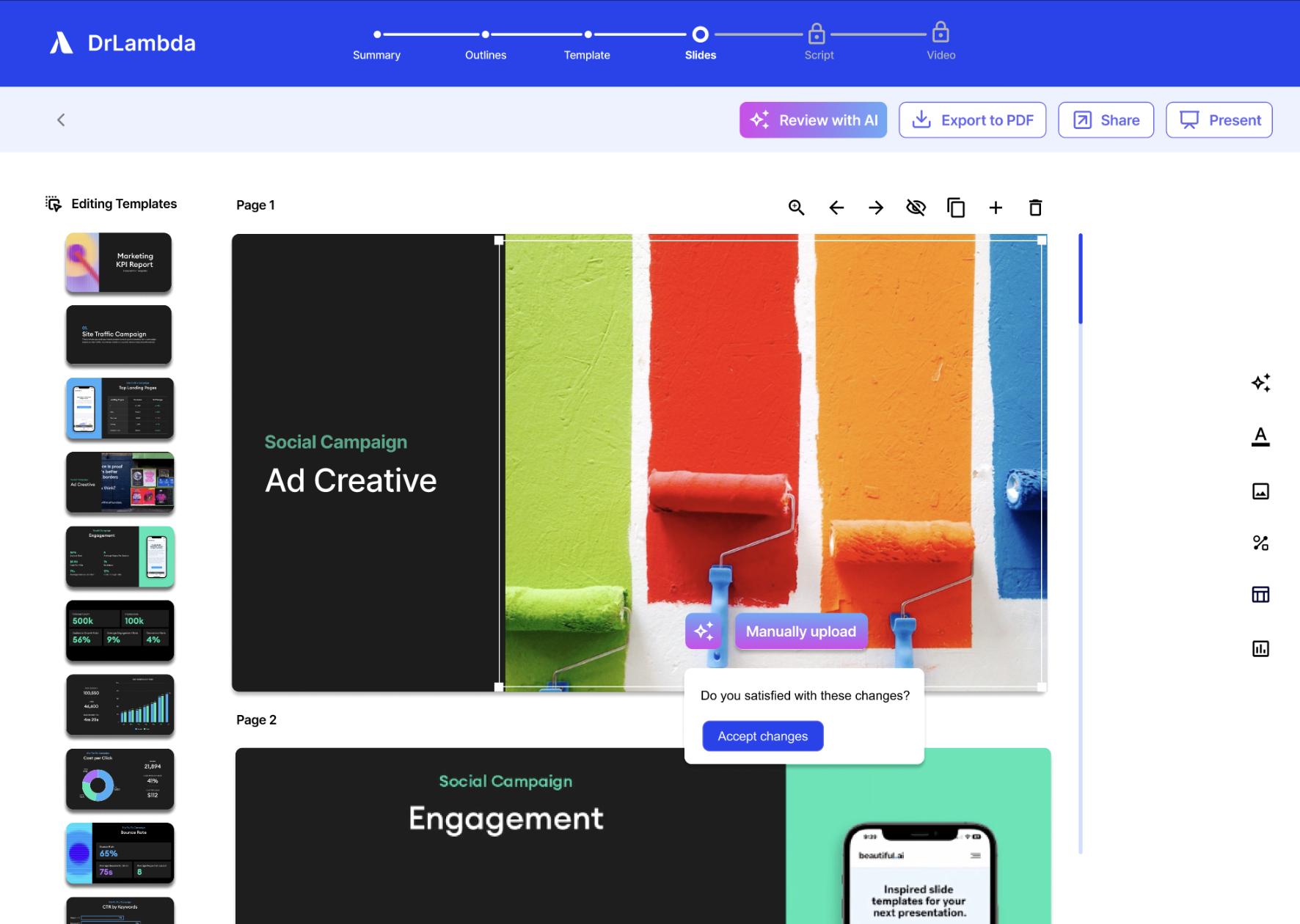
Prototype 03 · Contextual editing

Keep AI action adjacent to the content and its consequences.

Inside the editor, suggestions are scoped to a selection and presented as reviewable changes rather than invisible replacement.

  • Original and proposed content remain comparable.
  • Rationale explains the goal, not hidden chain-of-thought.
  • Accept, reject, edit, and undo are first-class states.
DrLambda contextual AI suggestionDrLambda accept AI change flow
04 · Failure-aware design

Control matters most when the output is almost right.

AMBIGUOUS REQUEST

Clarify before acting

The system asks about audience, goal, and scope when a request could create broad structural change.

PARTIAL SUCCESS

Preserve good output

Users can regenerate one affected region instead of restarting the entire deck or losing manual edits.

UNWANTED CHANGE

Recover with context

Undo restores the prior state and retains the rejected rationale so the next attempt can avoid the same direction.

05 · Product and implementation bridge

A shared change model made the AI workflow buildable.

Design the change object, not just the chat

The prototype defined what every AI edit needs to carry: target, scope, rationale, dependencies, user decision, and recovery state. This gave product and engineering a stable interaction contract across multiple AI actions.

INTERACTION_CONTRACT.DRLAMBDAv1.0
CHANGE_TARGETSelection, slide, section, or deck
PROPOSALBefore, after, rationale, affected dependencies
USER_DECISIONAccept, reject, edit, apply partially, compare
RECOVERY_STATEUndo checkpoint, preserved manual edits, rejected direction
0→1AI-native presentation product and authoring workflow
+19%Conversion through onboarding and product experimentation
+40%Retention following iterative workflow improvements