BUILD_02 · OLI · ADAPTIVE DECISION SYSTEM

Turn learning telemetry into the next useful action.

I redesigned OLI's core learning workflows for 1,000+ students and modeled a shared system that translates course signals into personalized priorities for students and actionable interventions for instructors.

RoleProduct Designer · workflow and systems
DesignedRole-based IA, task logic, intervention states
PrototypeLinked student and instructor decision workflows
ToolkitFigma · data visualization · logic models · usability testing
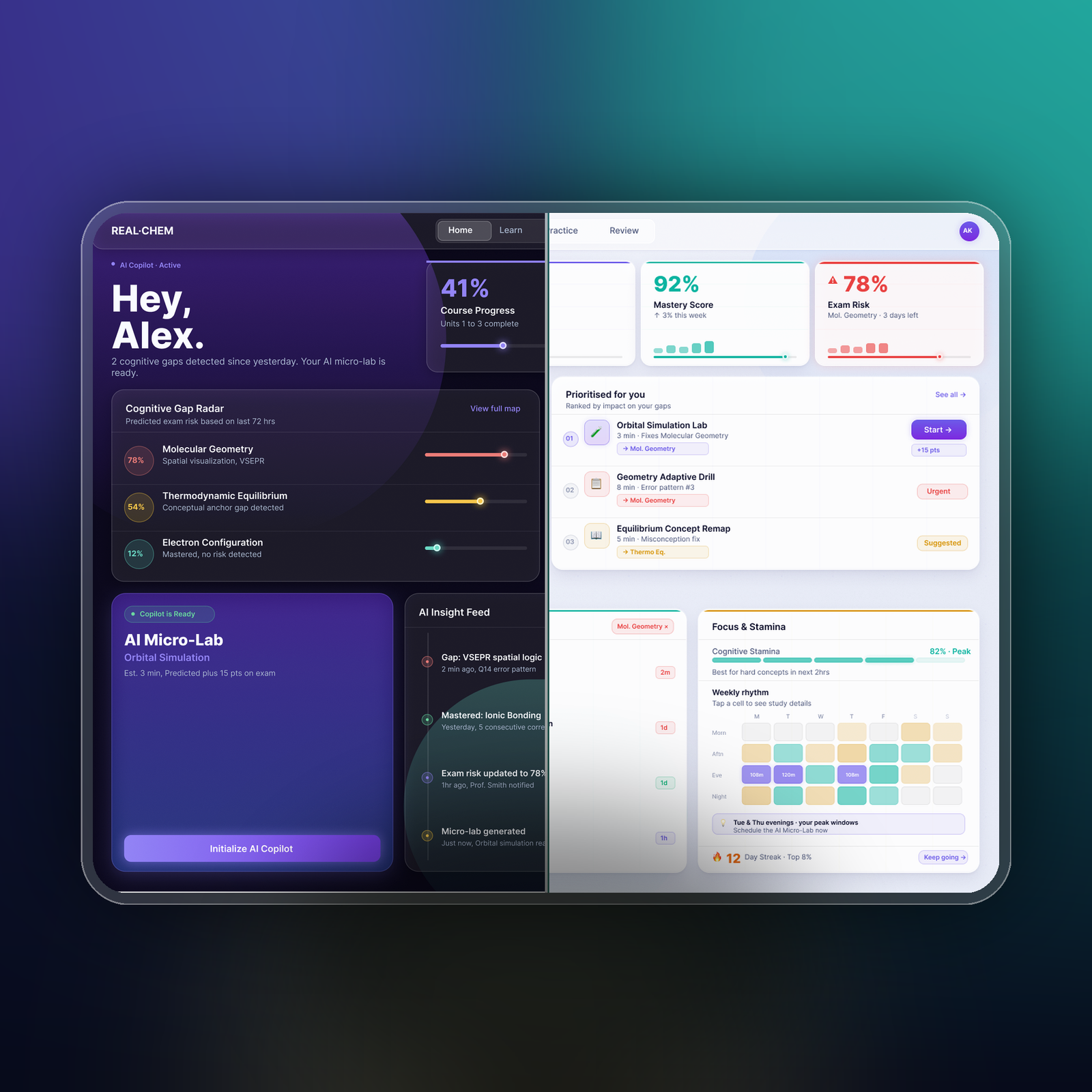
OLI adaptive learning dashboard
01 · Technical product question

What should the system recommend when every learner is in a different state?

Telemetry is not guidance until the system can rank, explain, and route the next action.

Students saw progress but still had to decide what mattered. Instructors saw class-level signals but lacked a consistent path from risk detection to targeted intervention.

Constraint 01

Two roles, one model

Students and instructors need different actions while relying on the same underlying mastery and activity data.

Constraint 02

Incomplete evidence

Low activity can mean confusion, absence, or simply an unfinished task; the UI must avoid false certainty.

Constraint 03

High consequence ranking

Priority order affects what students study and where instructors spend limited intervention time.
02 · Decision model

A shared signal pipeline with role-specific outputs.

The system normalizes learning signals, evaluates urgency and confidence, then changes its output according to who needs to act.

Signal-to-action pipeline
01Collect signals
02Detect friction
03Rank priority
04Explain why
05Route action
Student viewNext task · guidance · practice
Instructor viewCohort risk · evidence · intervention
ConfidenceSufficient · partial · uncertain
Feedback loopAttempt · outcome · reprioritize
03 · Working behavior

The prototype connected diagnosis to intervention.

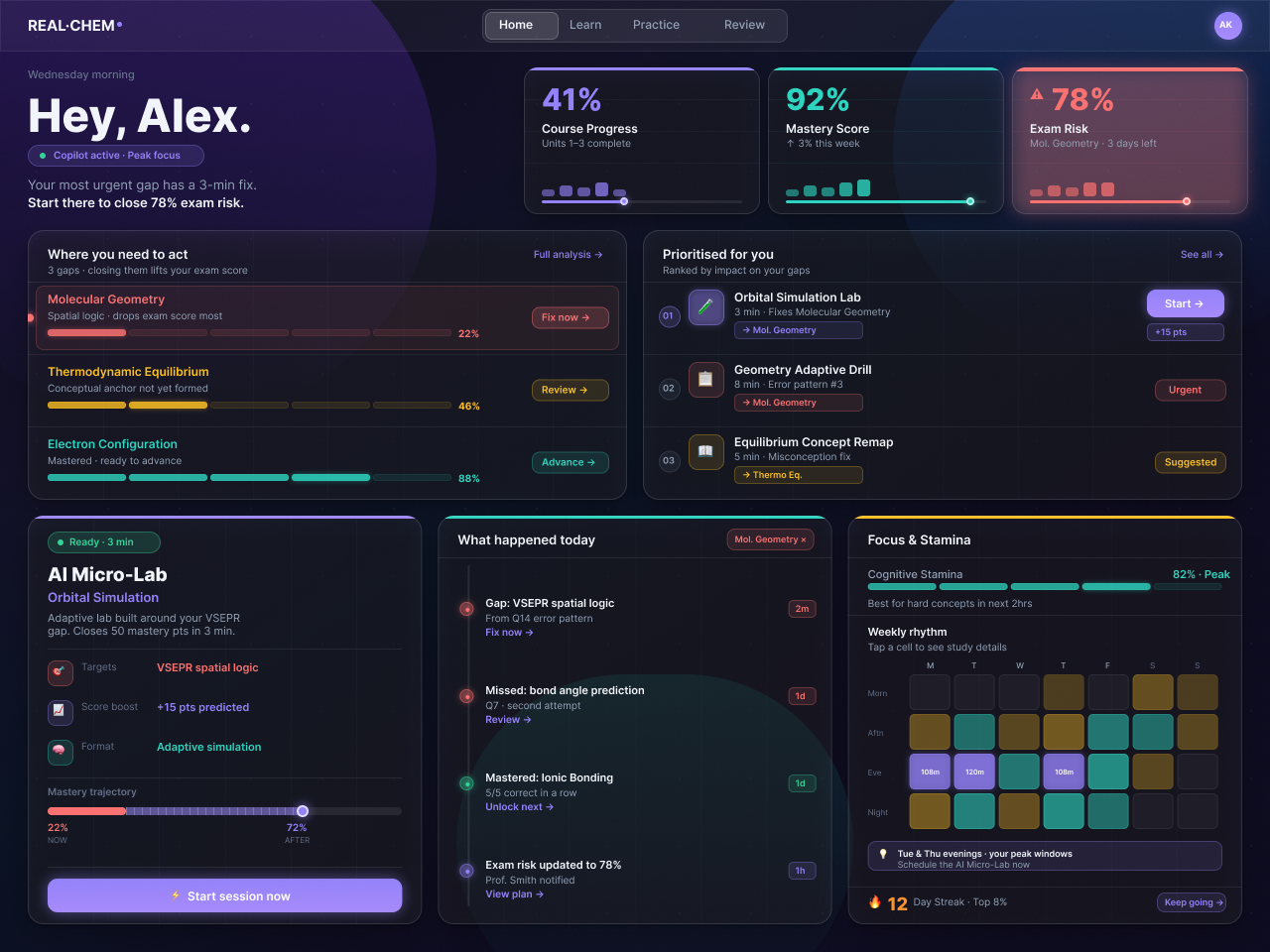
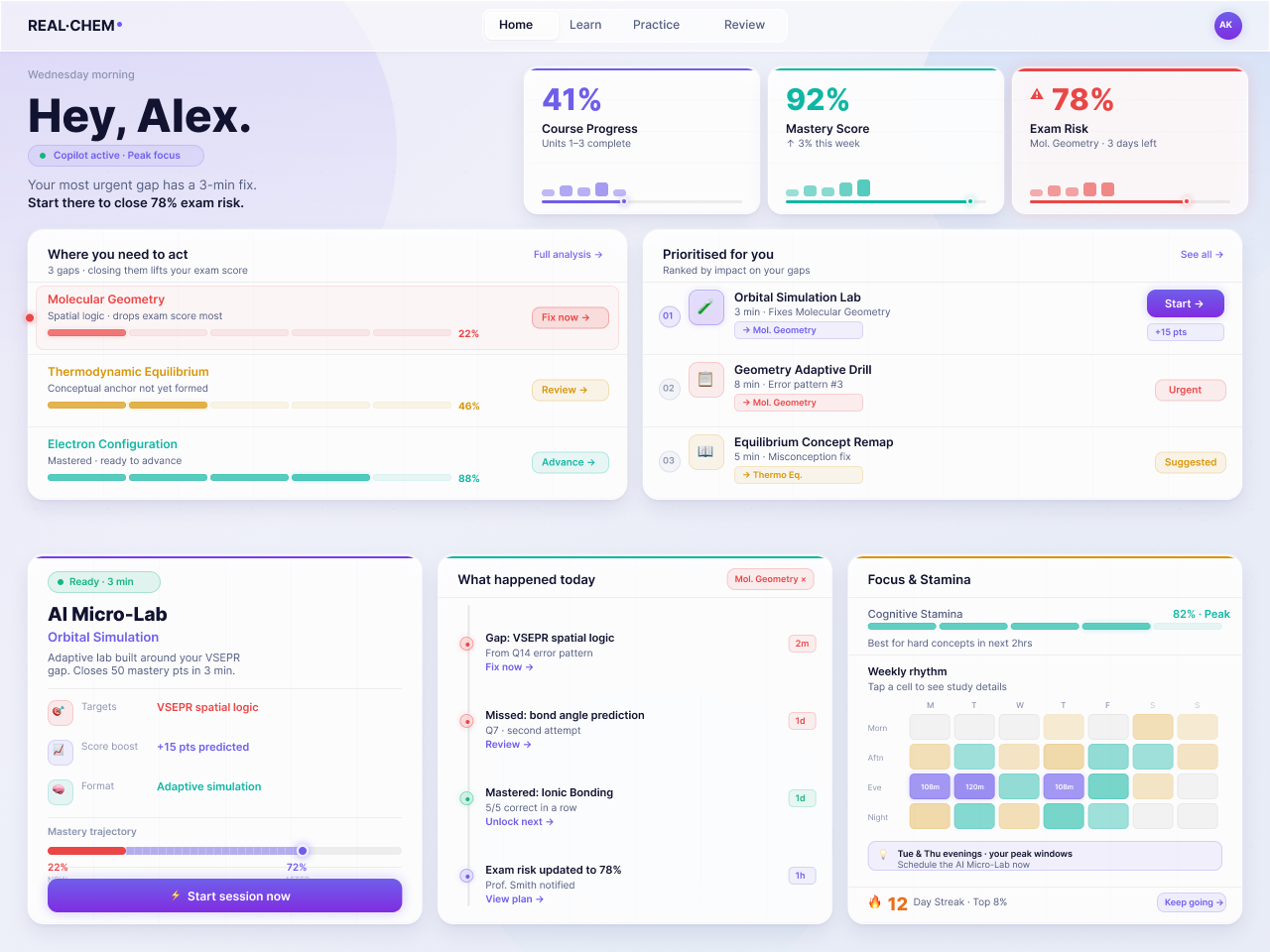
Prototype 01 · Student queue

Replace passive progress with a ranked action surface.

The student home prototype transforms multiple course signals into a small set of contextual next steps.

  • Priority combines urgency, mastery gap, and deadline proximity.
  • Every recommendation explains the signal that triggered it.
  • Completing or dismissing an action immediately updates the queue.
OLI student dashboard light modeOLI student dashboard dark mode
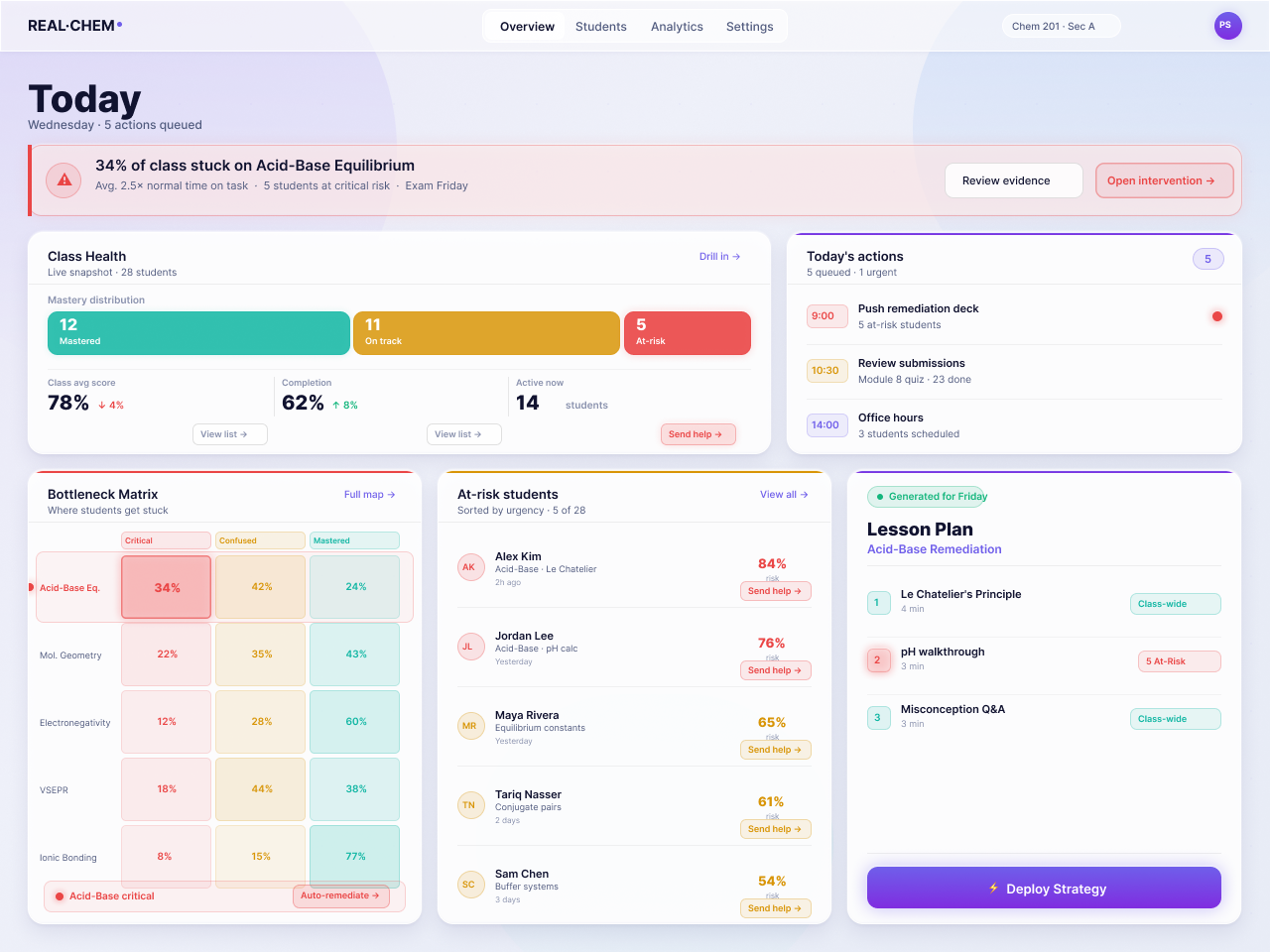
Prototype 02 · Instructor intervention

Keep risk evidence next to the action it unlocks.

The instructor prototype preserves the path from cohort signal to student evidence and suggested intervention, reducing context switching.

  • Risk is decomposed into interpretable contributing signals.
  • Suggested actions remain editable before assignment.
  • Instructors can inspect individual evidence without losing cohort context.
OLI instructor intervention dashboard
04 · Failure-aware design

Recommendations stay useful when the data is imperfect.

LOW CONFIDENCE

Ask for more evidence

When the signal set is incomplete, the system shows uncertainty and recommends observation instead of labeling a learner at risk.

CONFLICTING SIGNALS

Expose the disagreement

Strong mastery and low participation are displayed as separate facts rather than collapsed into one misleading score.

STALE PRIORITY

Recompute after action

Completed tasks, instructor overrides, and new attempts update the queue so recommendations do not persist beyond their relevance.

05 · Engineering bridge

Define the workflow logic before arguing about pixels.

A prototype plus a state contract

I worked with engineering to define the logic behind ranking, explanation, role permissions, and state transitions. Making those behaviors explicit reduced design-to-development iteration cycles by 40%.

INTERACTION_CONTRACT.OLIv1.0
PRIORITY_INPUTMastery gap, deadline, attempts, engagement, instructor override
EXPLANATIONTrigger signal, confidence, expected benefit, alternative action
ROLE_POLICYStudent acts · instructor configures · system reprioritizes
REFRESH_EVENTCompletion, new attempt, dismissal, assignment, data expiry
+28%Task completion after simplifying core learning workflows
-40%Design-to-development iteration cycles
1,000+Students supported by the redesigned workflows