BUILD_01 · RED · MULTIMODAL AI ECOSYSTEM

One intelligence layer. Four connected product surfaces.

I translated evolving AI search, multimodal discovery, creator workflows, and personalization capabilities into one coherent consumer experience for a platform serving 300M+ monthly active users.

RoleProduct Designer · AI product systems
DesignedMultimodal journey, memory model, AI interaction patterns
PrototypeEnd-to-end mobile ecosystem across four surfaces
ToolkitFigma · AI workflows · design systems · evaluation logic
RED multimodal AI creator experience
01 · Technical product question

How should many AI capabilities feel like one product?

Users should not have to understand which model, surface, or system produced an answer.

AI search, visual understanding, generation, publishing, and personalization had different inputs and failure modes. The experience needed a common interaction grammar without flattening what each capability did best.

Constraint 01

Mixed input modalities

Text, screenshots, photos, products, personal taste, and creator intent all enter the system differently.

Constraint 02

Uneven confidence

Recommendations and generated outputs need source transparency, confidence cues, and inspectable reasoning.

Constraint 03

Cross-surface continuity

Discovery only becomes valuable when intent, saved context, and edits persist into later actions.
02 · System model

A persistent loop from inspiration to action.

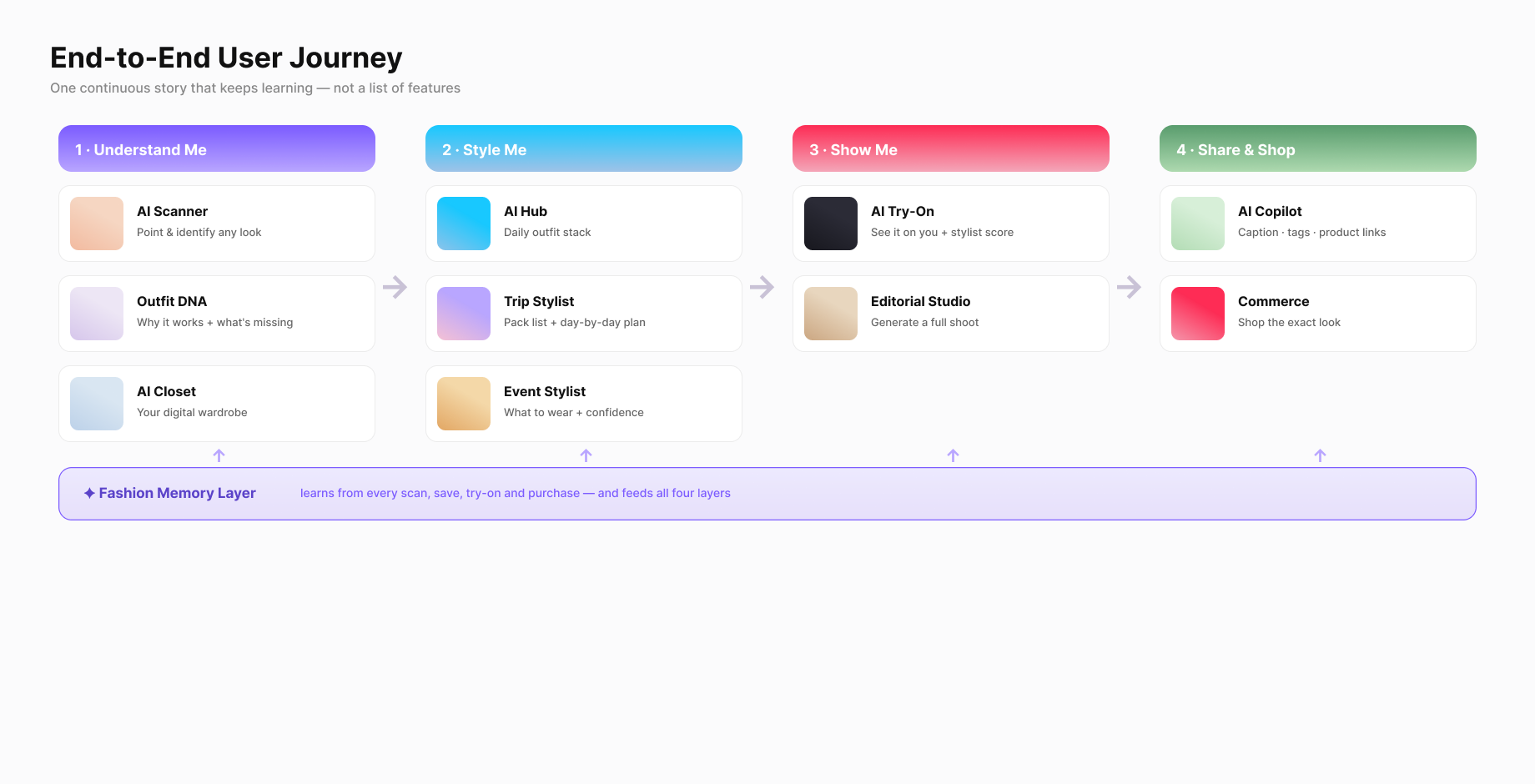
I modeled the ecosystem as a stateful loop, not a collection of AI screens. Each step produces structured context that the next surface can reuse.

Consumer intelligence loop
01Discover intent
02Understand content
03Generate options
04Edit and publish
05Learn from choice
InputText · image · behavior
ReasoningIntent · retrieval · matching
ControlPreview · edit · recover
MemoryTaste · context · history
03 · Working behavior

The prototype made continuity, not decoration, testable.

Prototype 01 · Orchestration

Make the product architecture visible before polishing screens.

The prototype connected entry points, AI actions, state transitions, and downstream destinations so teams could judge the ecosystem as one journey.

  • One context object moves across discovery, generation, and publishing.
  • Every AI output exposes a next action rather than ending at a result.
  • Reusable patterns reduce different model behaviors into predictable controls.
RED AI journey architecture
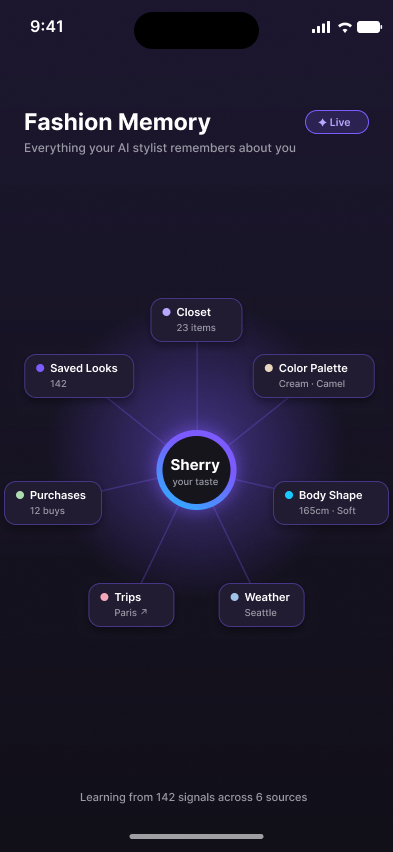
Prototype 02 · Persistent memory

Turn personalization into an inspectable user asset.

Fashion Memory makes what the system knows visible, editable, and useful across future sessions instead of hiding personalization inside a black box.

  • Separate inferred taste from user-confirmed preferences.
  • Let people correct signals before they affect future recommendations.
  • Show why memory changed after saves, skips, and purchases.
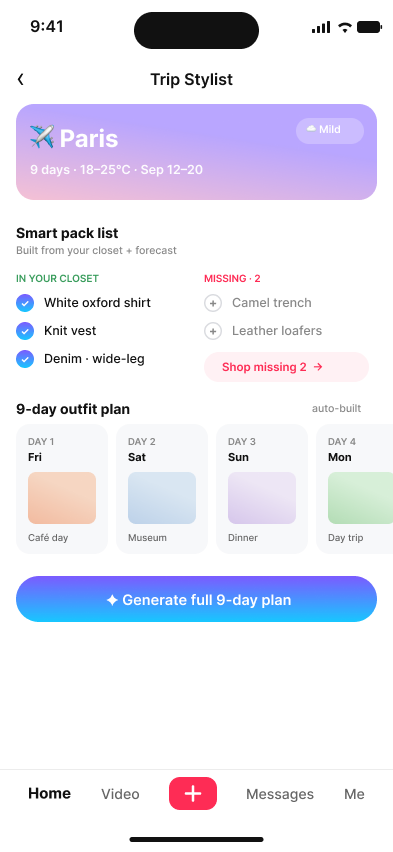
Fashion memory system mapTrip stylist generated plan
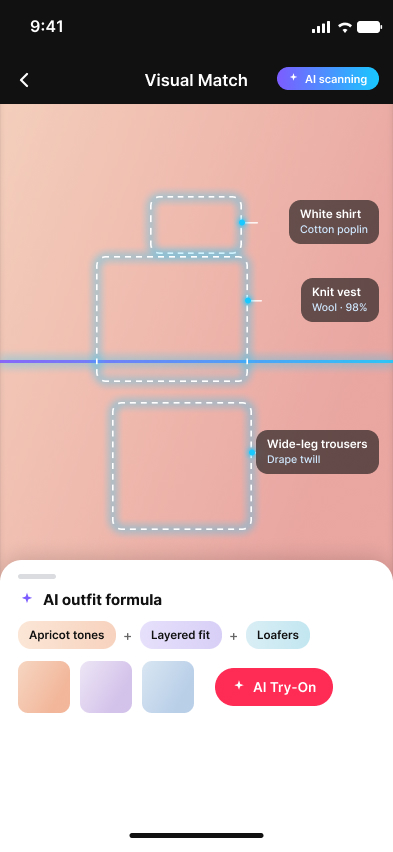
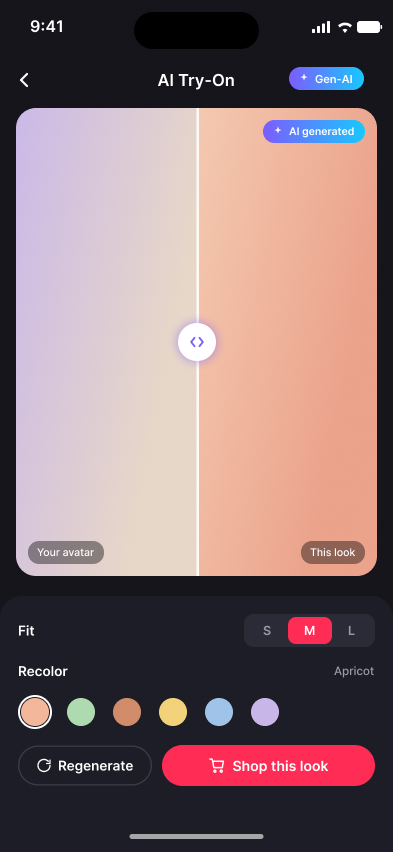
Prototype 03 · Multimodal control

Let people move from image understanding to editable generation.

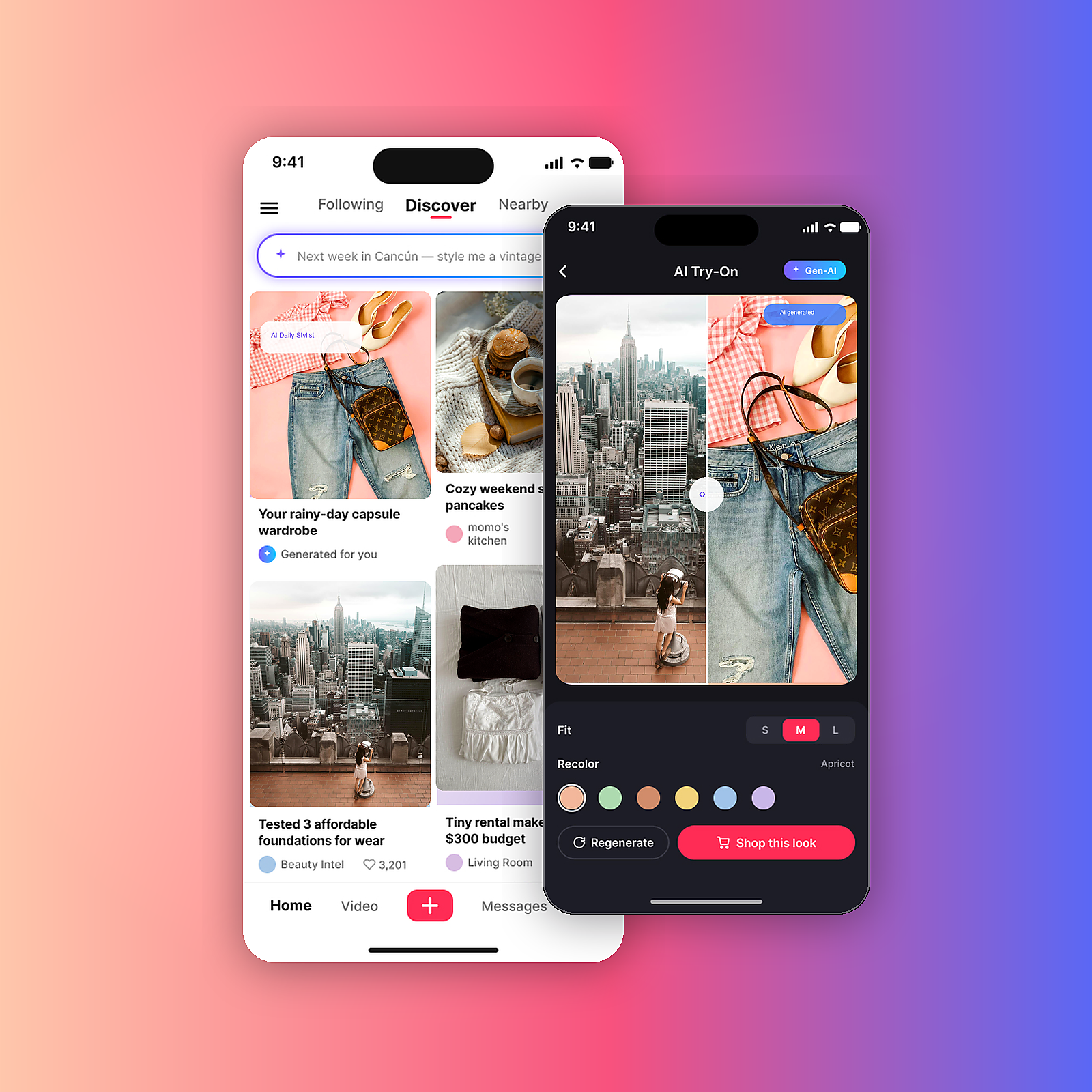
The interaction sequence makes AI interpretation inspectable before the user commits to a generated look or publishing action.

  • Detected attributes remain editable.
  • Generated recommendations explain which signals they used.
  • Users can branch, compare, save, or return without losing context.
AI scanner interfaceAI try-on interface
04 · Failure-aware design

The AI experience includes doubt, correction, and recovery.

UNCERTAIN INPUT

Expose confidence

Low-confidence visual attributes are marked for review instead of being presented as facts.

WRONG INFERENCE

Correct the memory

User corrections update the local preference model and explain what will change next time.

UNWANTED OUTPUT

Branch without restarting

People can revise one constraint, preserve the rest, compare alternatives, and return to an earlier state.

05 · Bridge to scale

Reusable interaction contracts aligned design, AI, and engineering.

From model capability to product behavior

I partnered with product, engineering, AI, and recommendation teams to define how model states should appear, what control users receive, and how the system recovers when confidence is low.

INTERACTION_CONTRACT.RED_AIv1.0
INPUT_STATEModality, permissions, completeness, confidence
OUTPUT_STATESource, explanation, editable attributes, next actions
RECOVERYCorrect, regenerate locally, compare, undo, return
MEMORY_WRITEExplicit confirmation before persistent preference updates
300M+Monthly active user platform context
4Interconnected AI product surfaces unified
1 systemShared interaction patterns for transparency, control, and recovery